Scatter Points
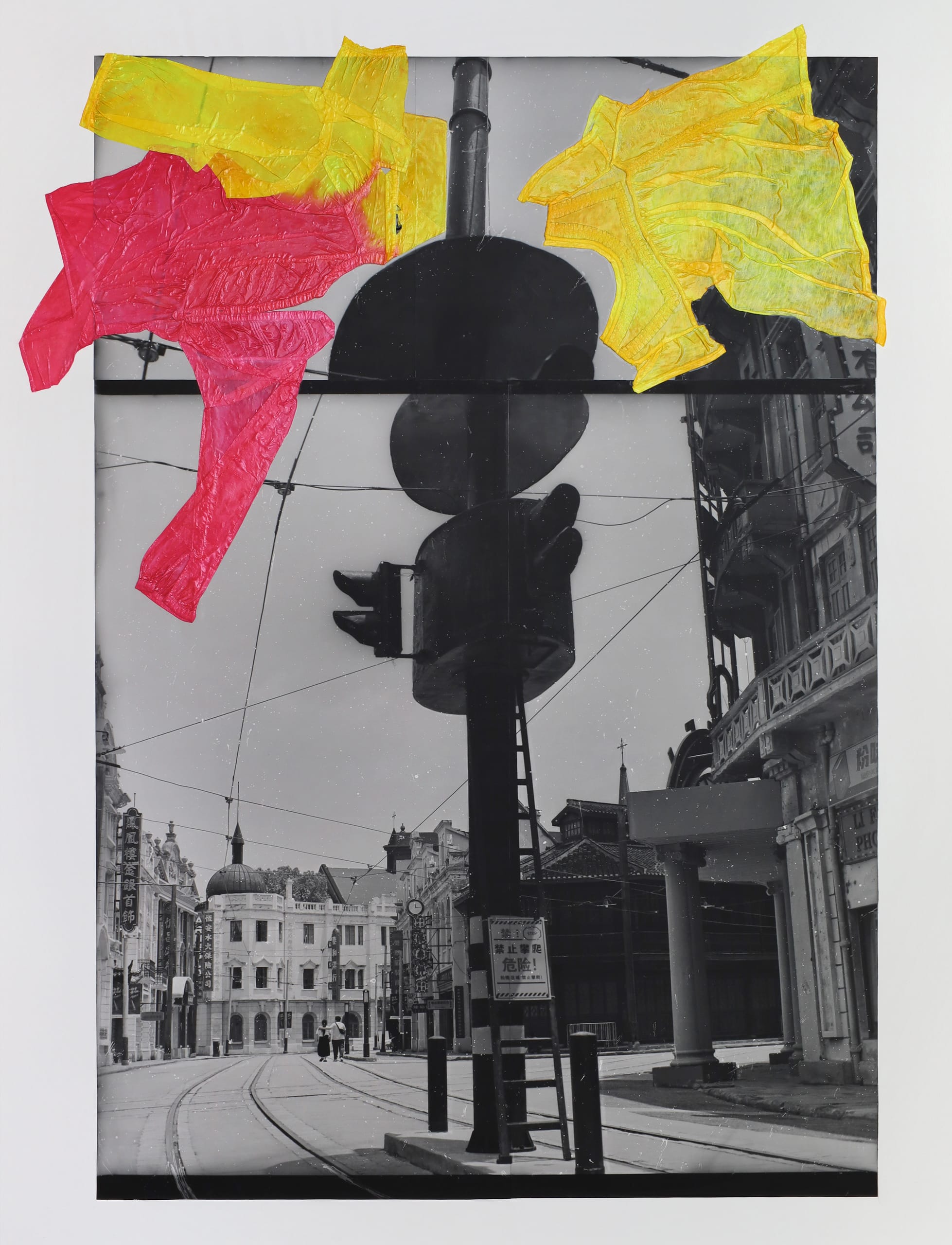
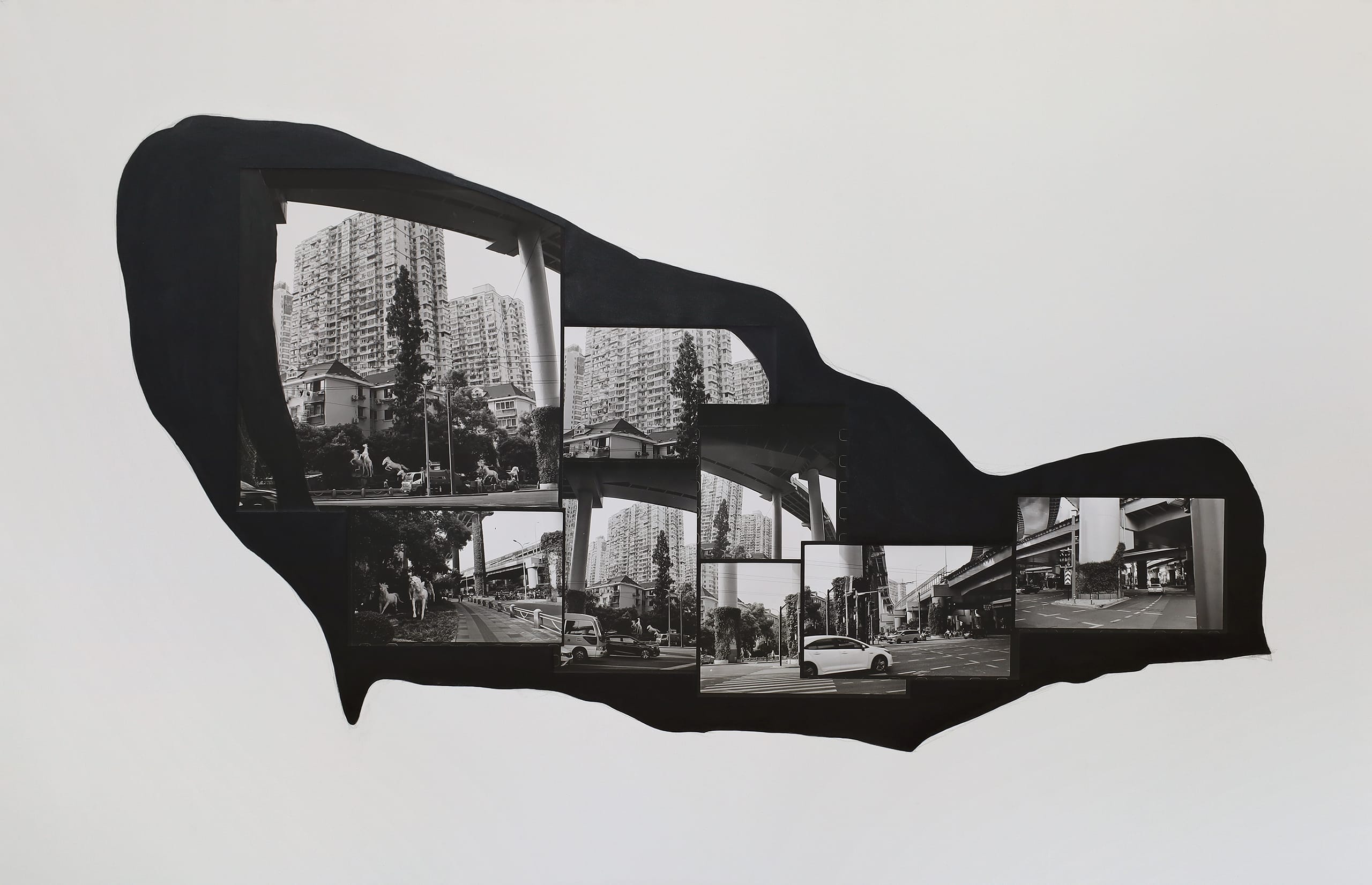
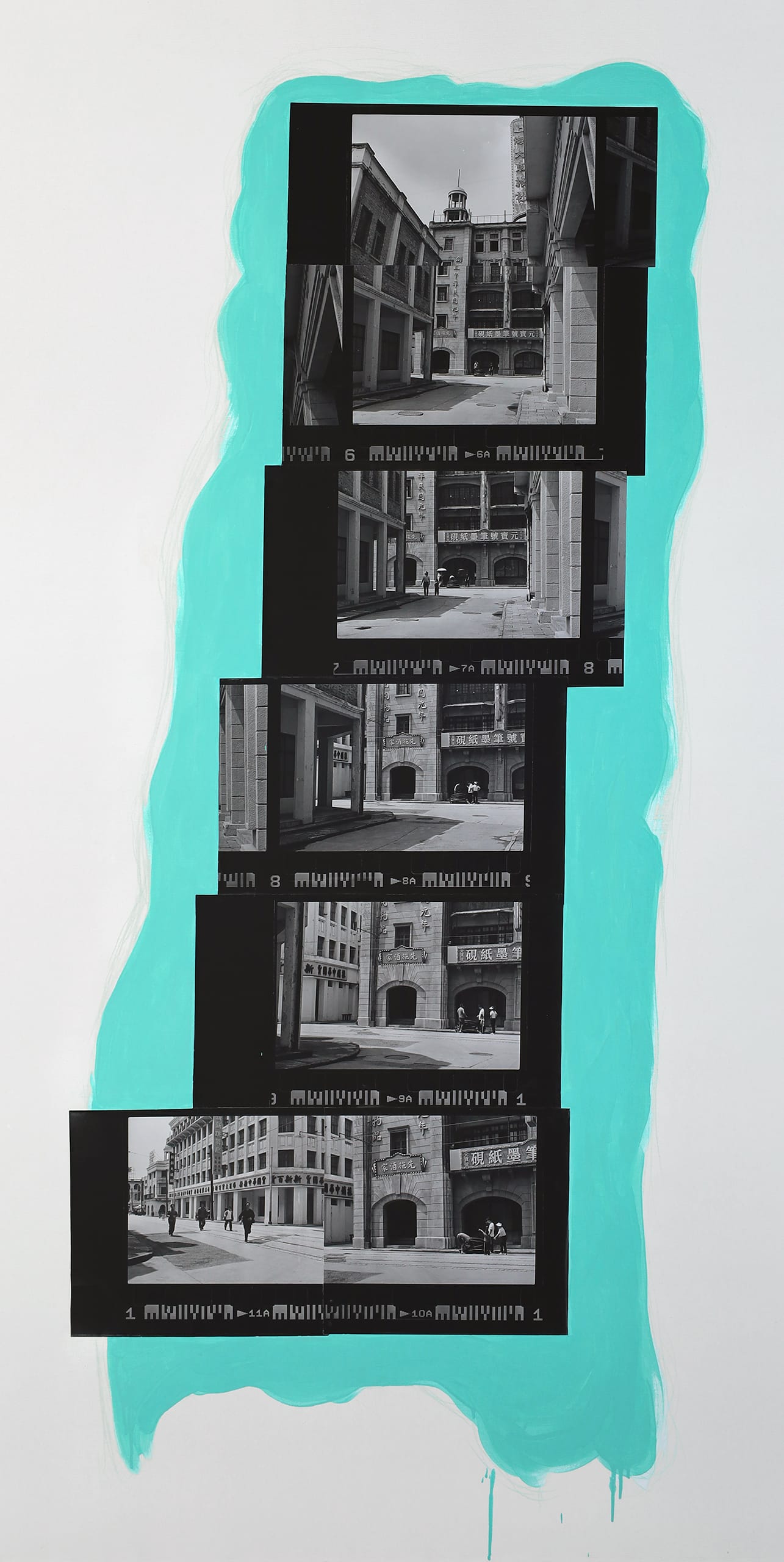
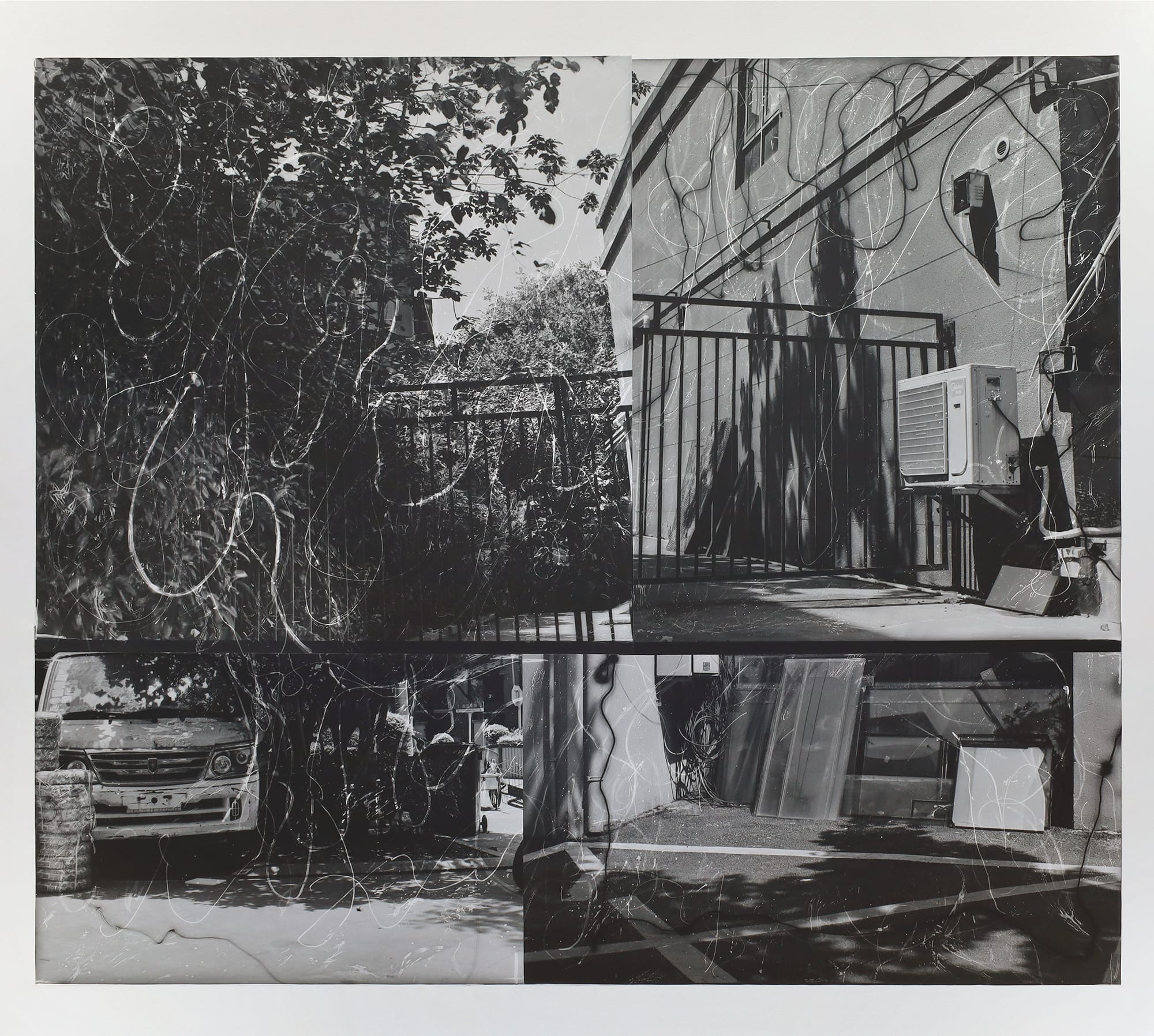
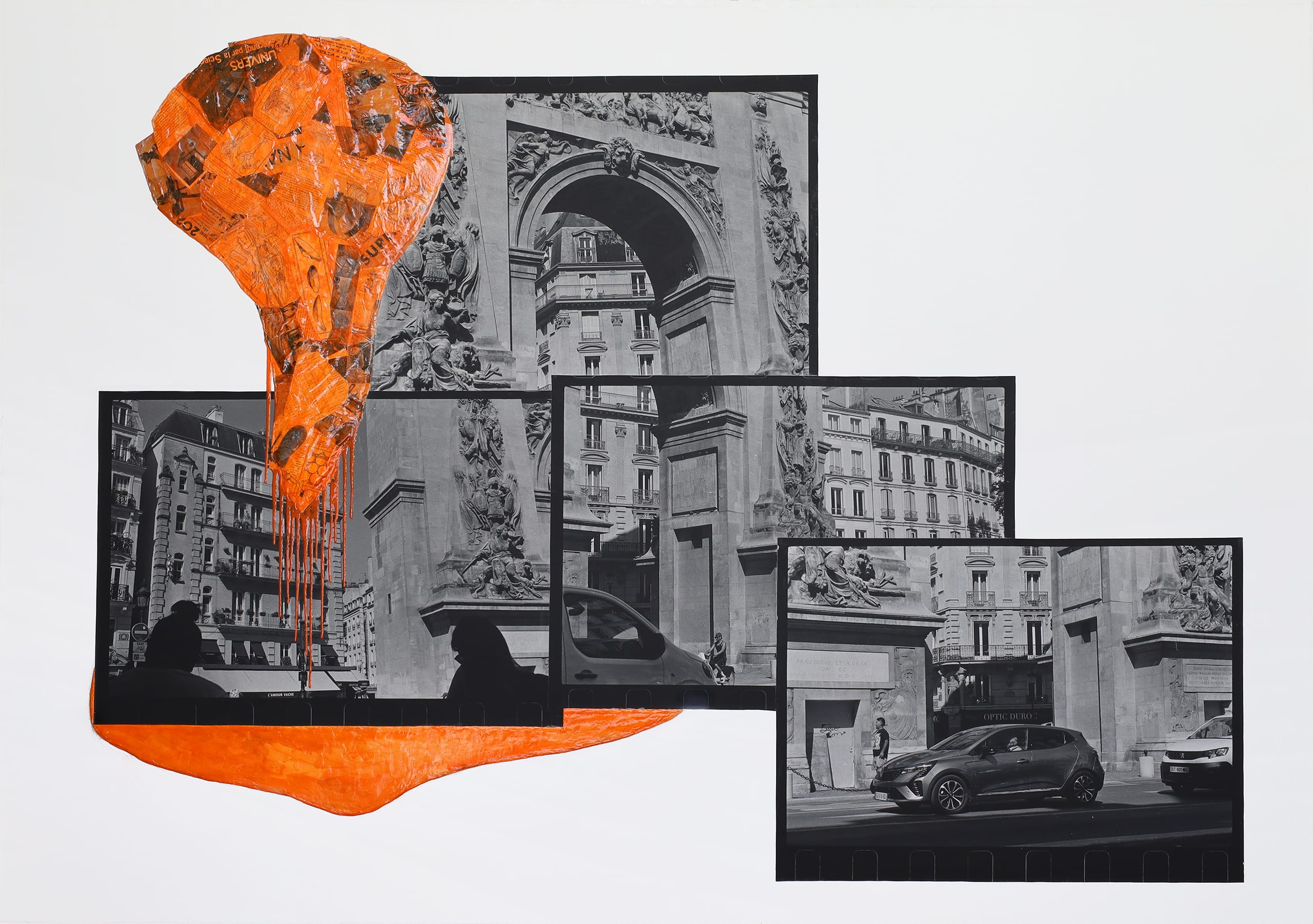
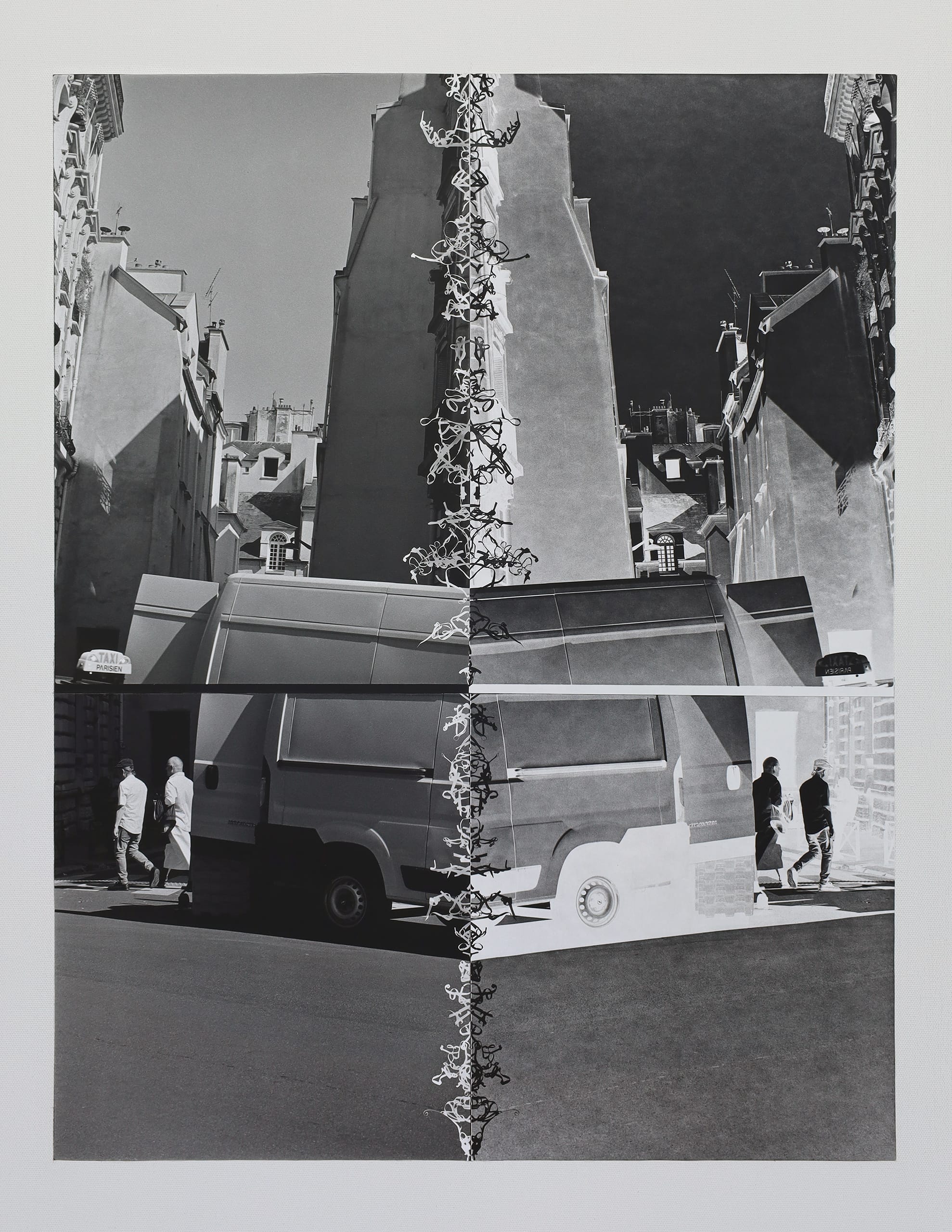
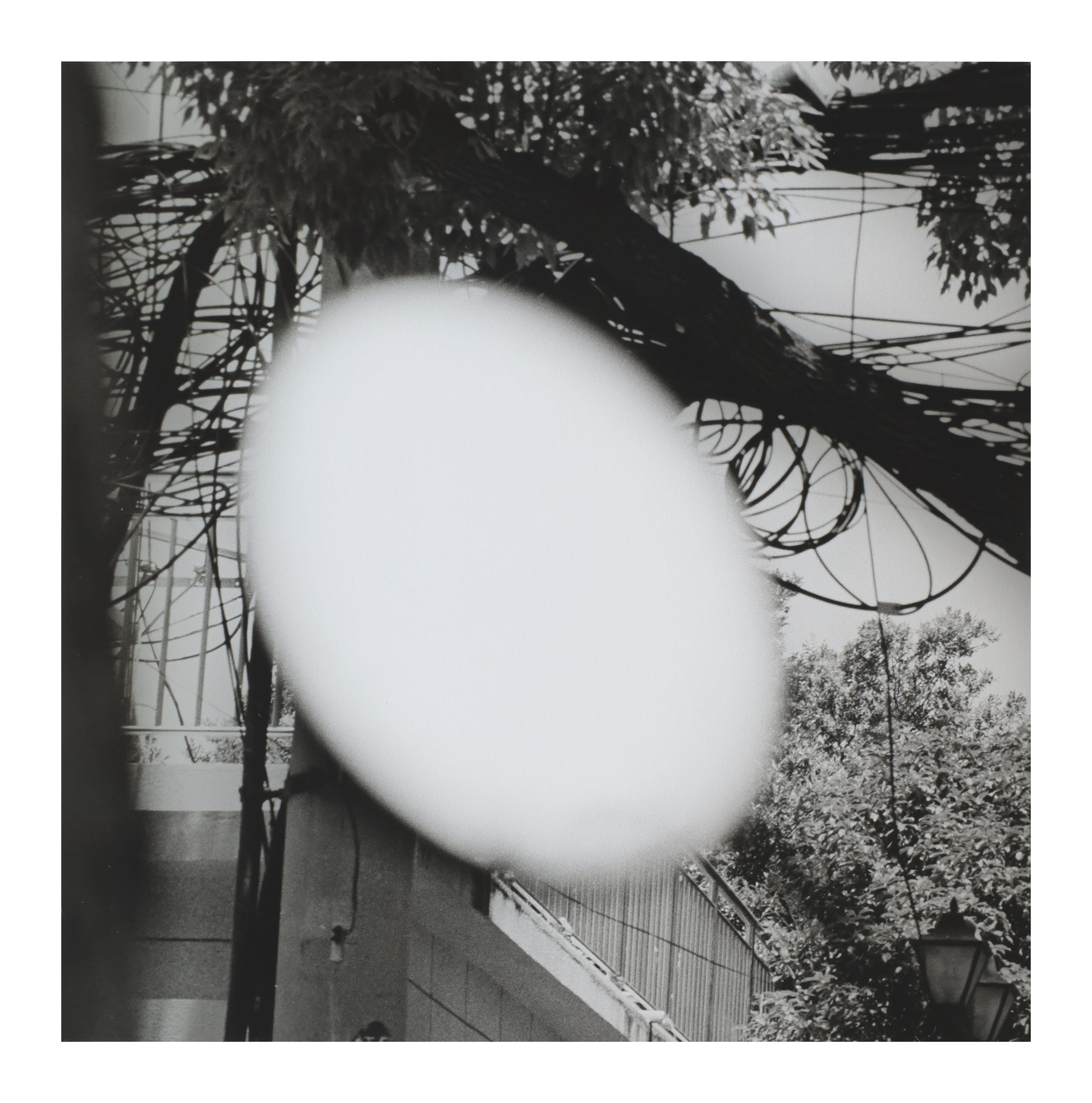
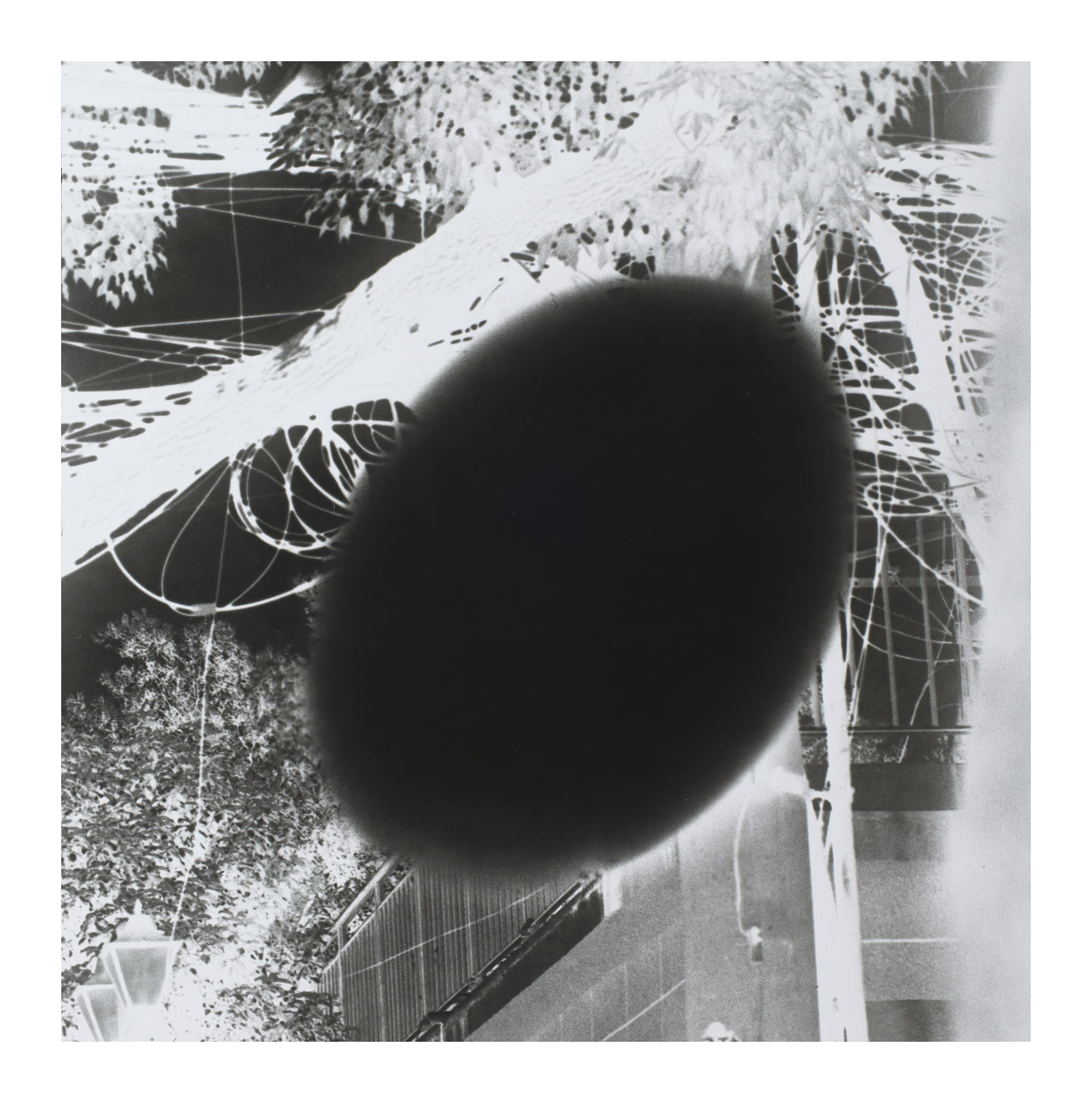
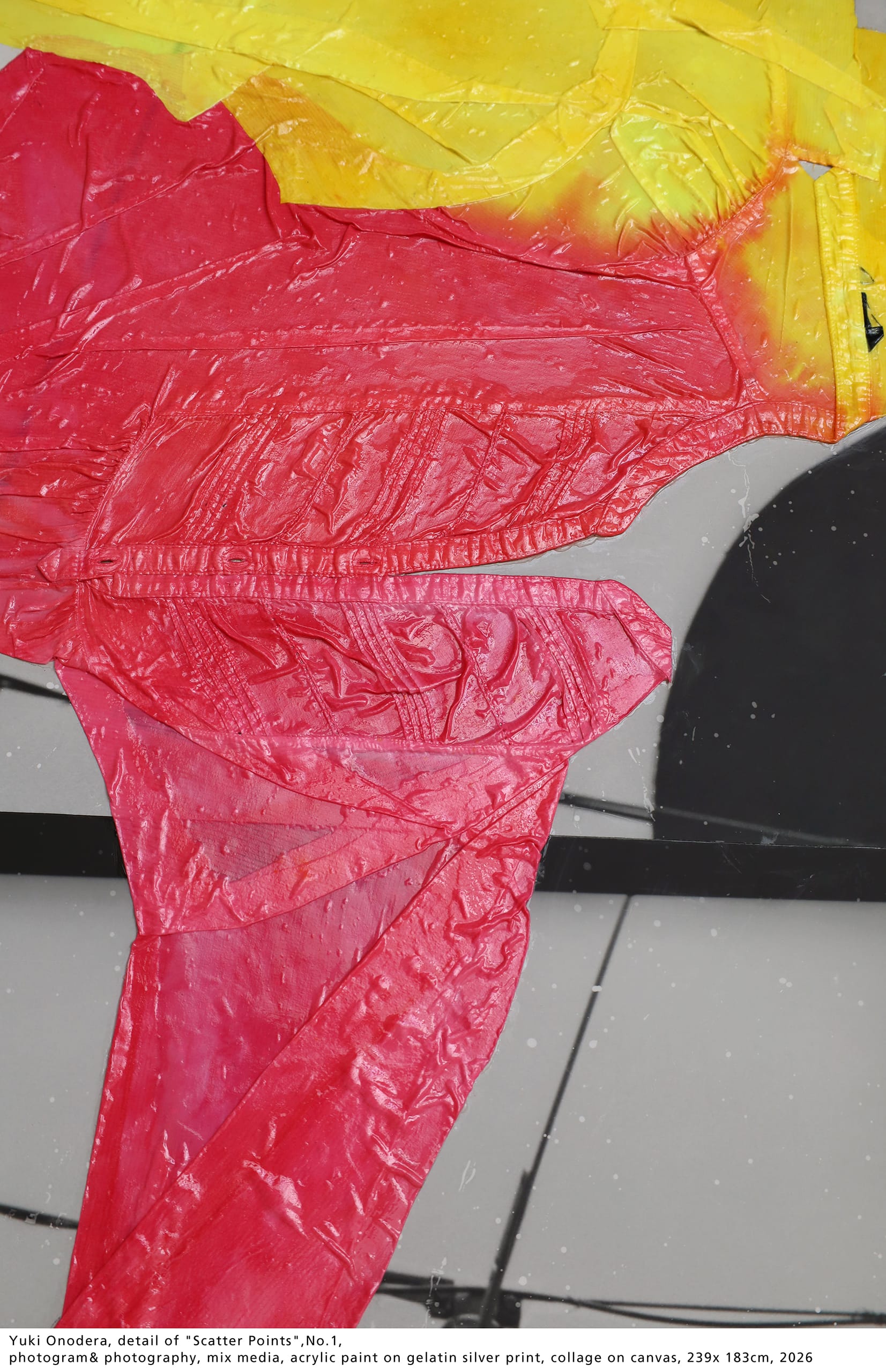
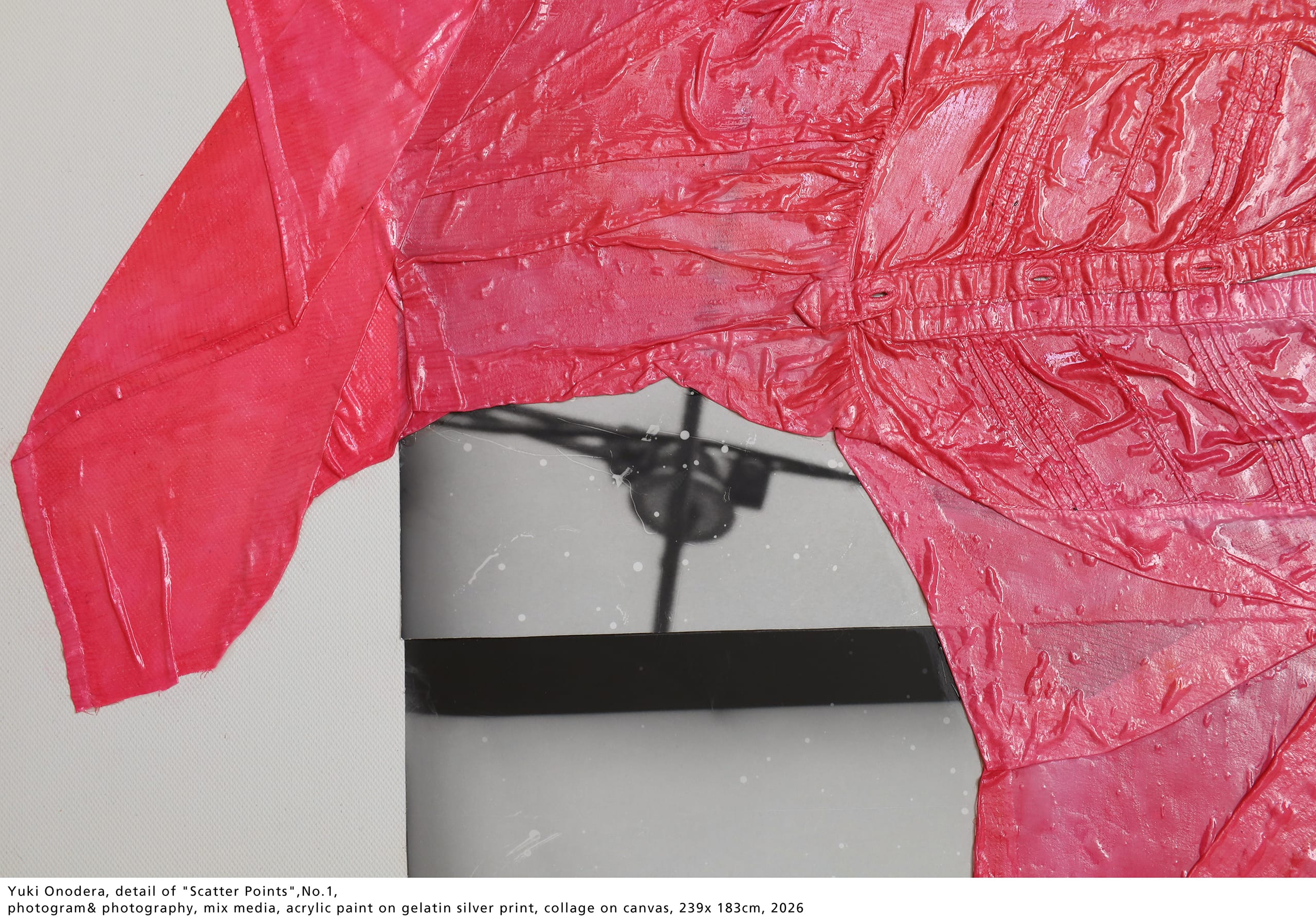
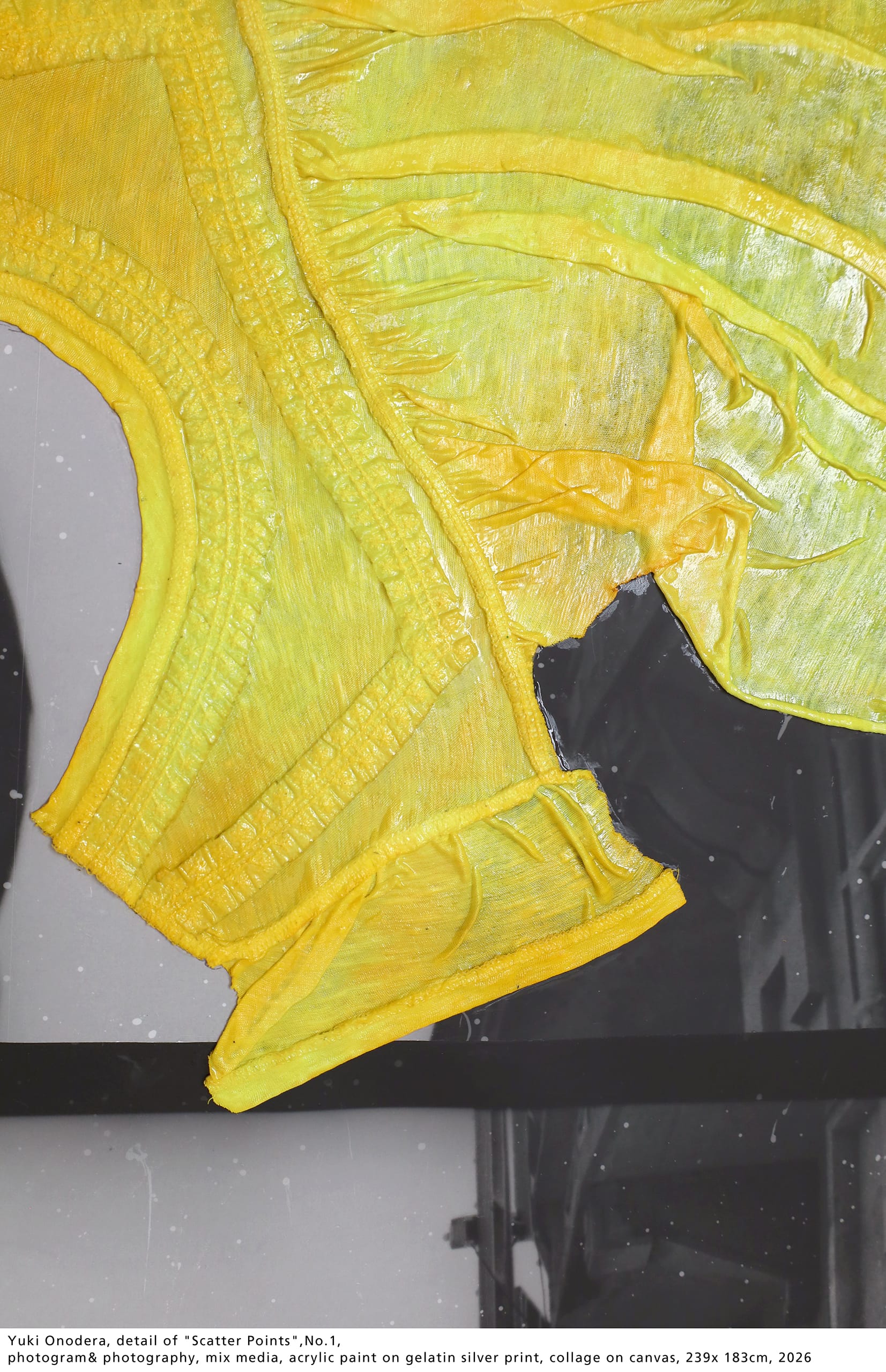
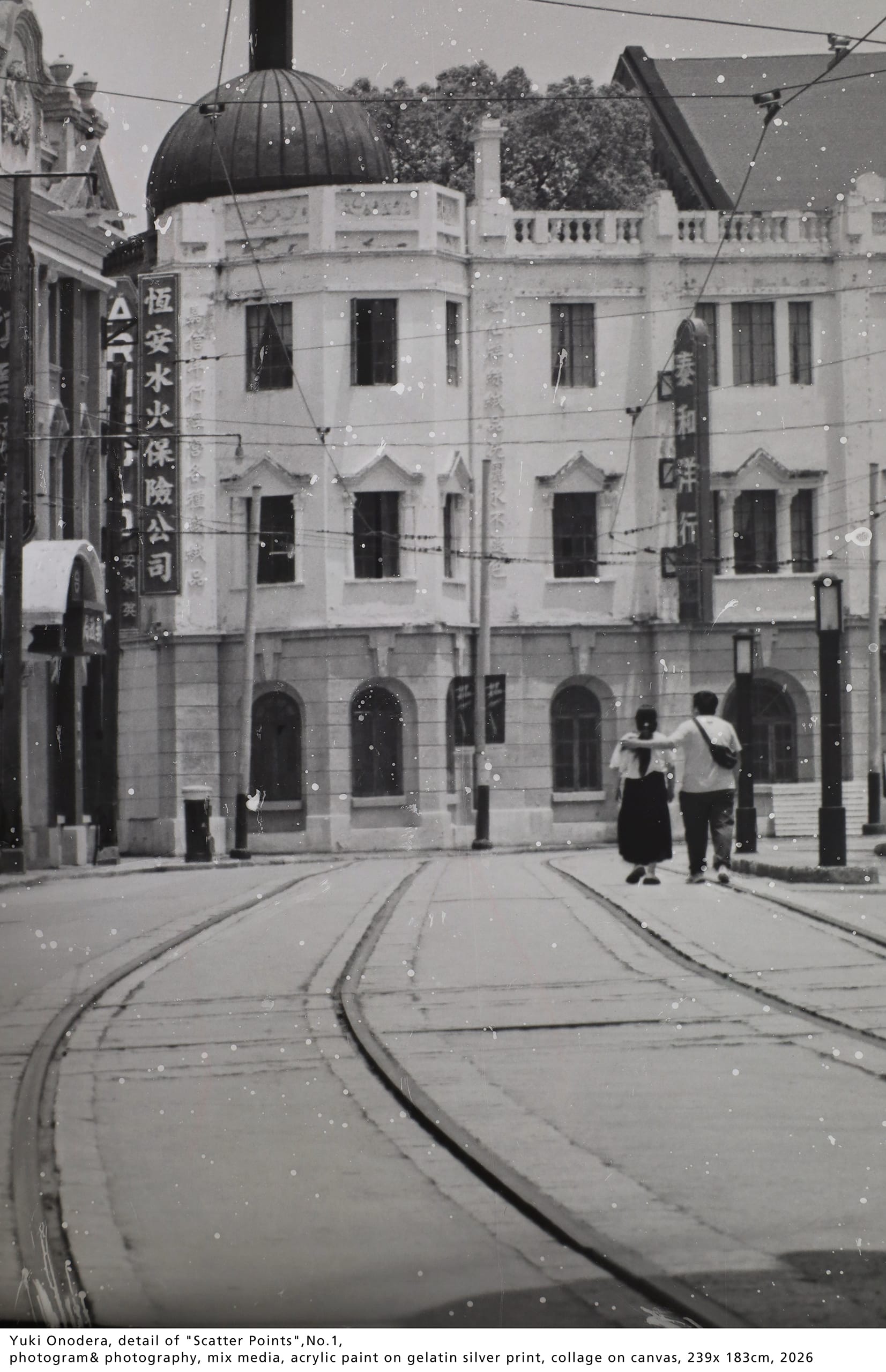
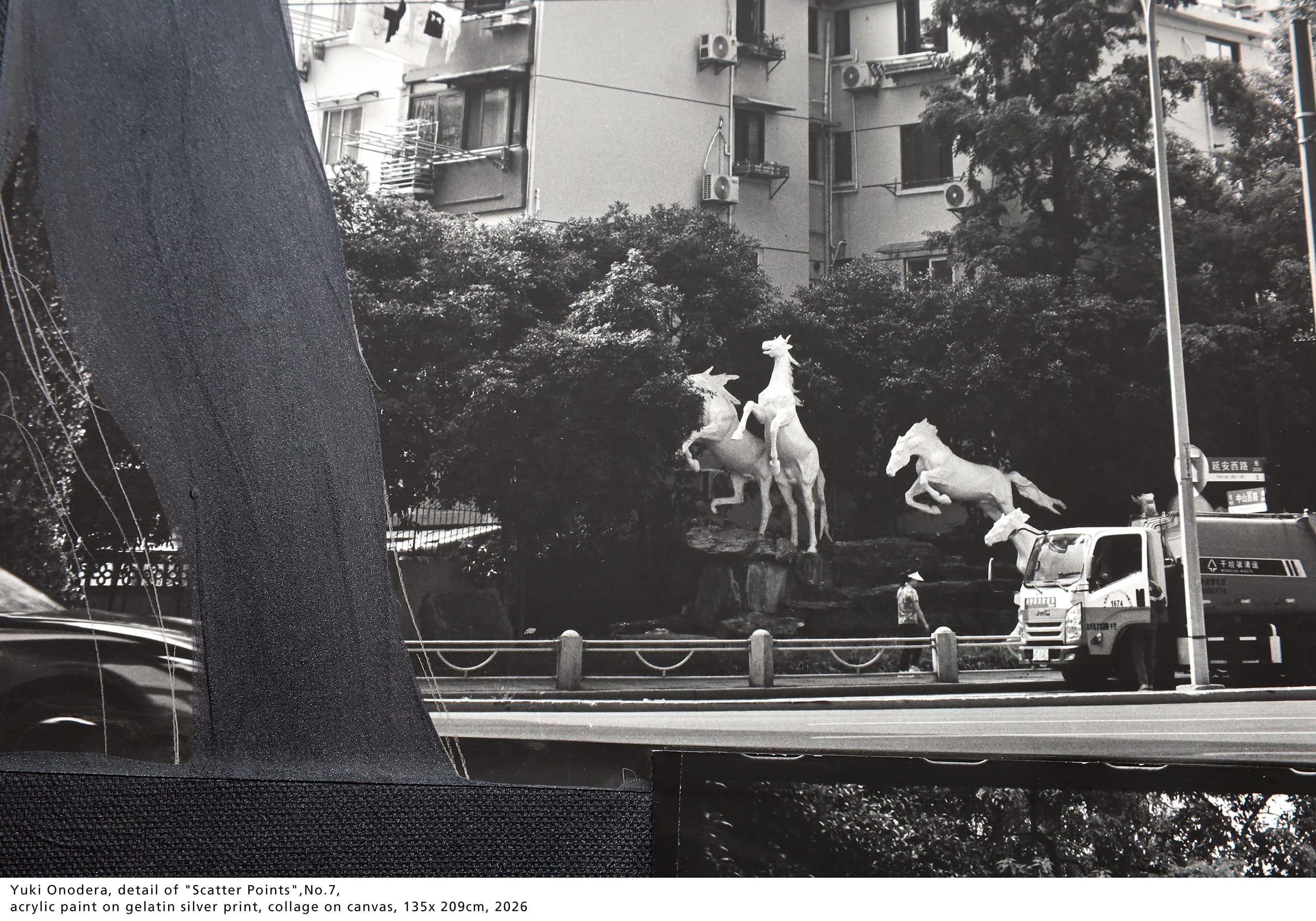
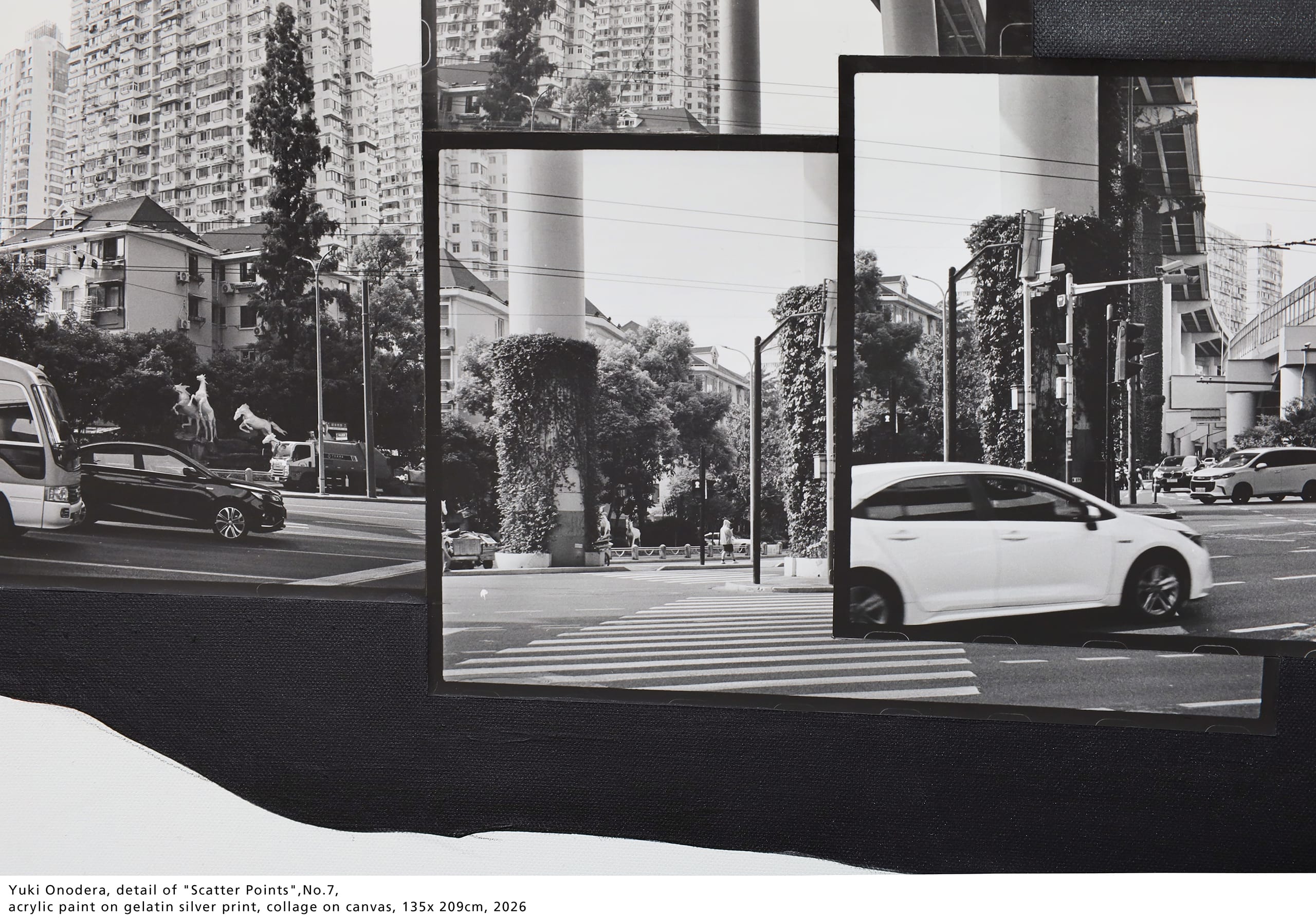
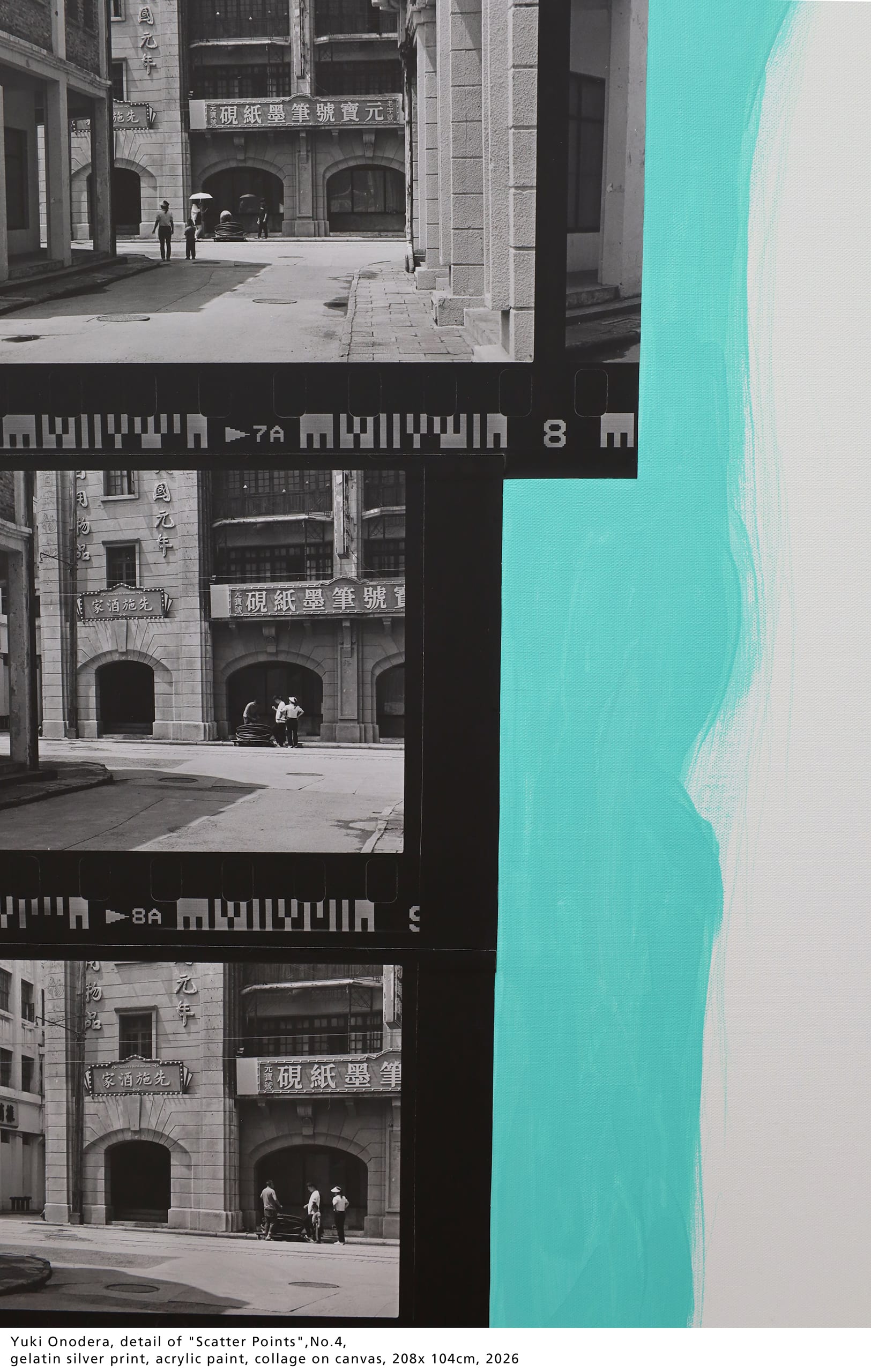
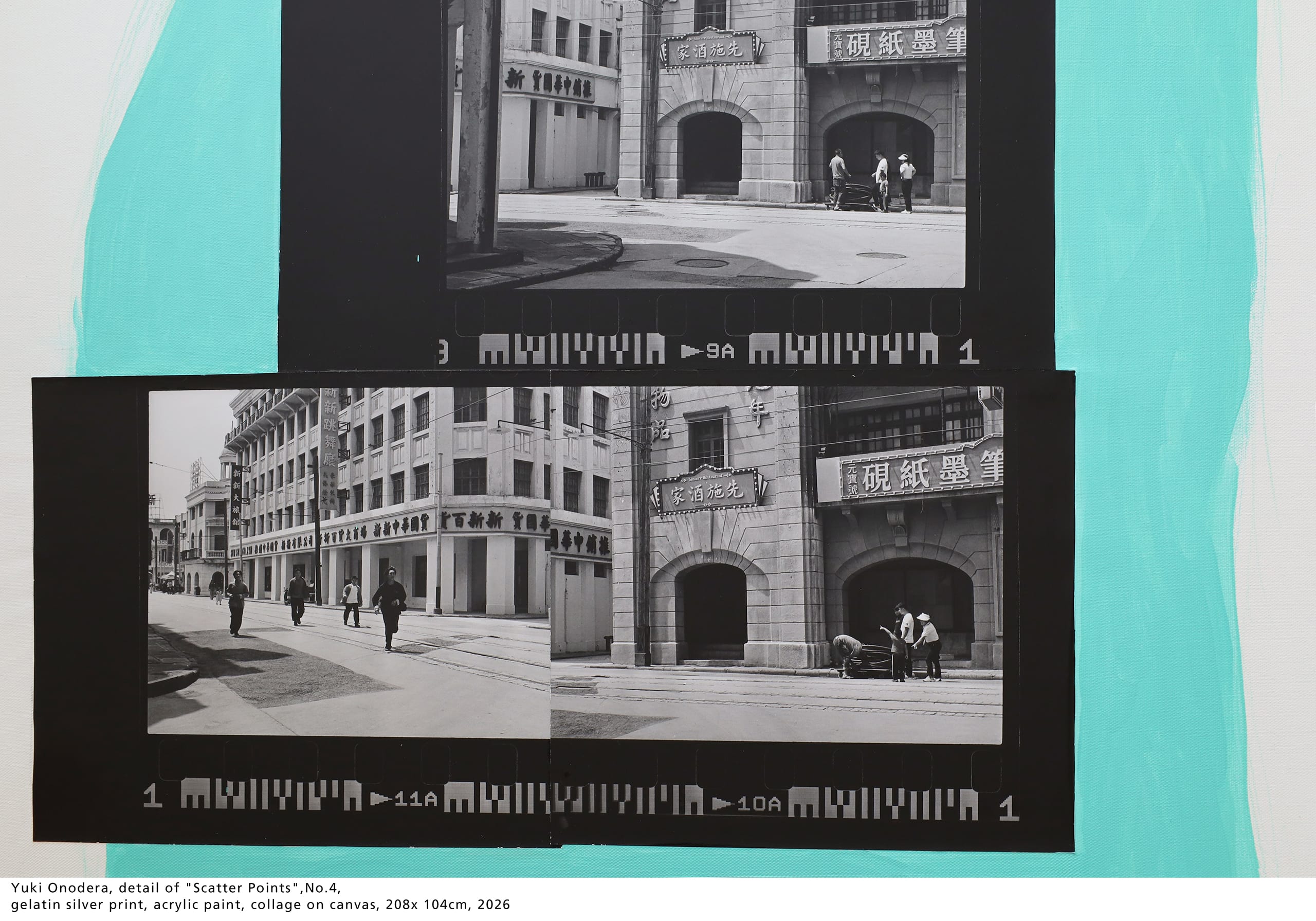
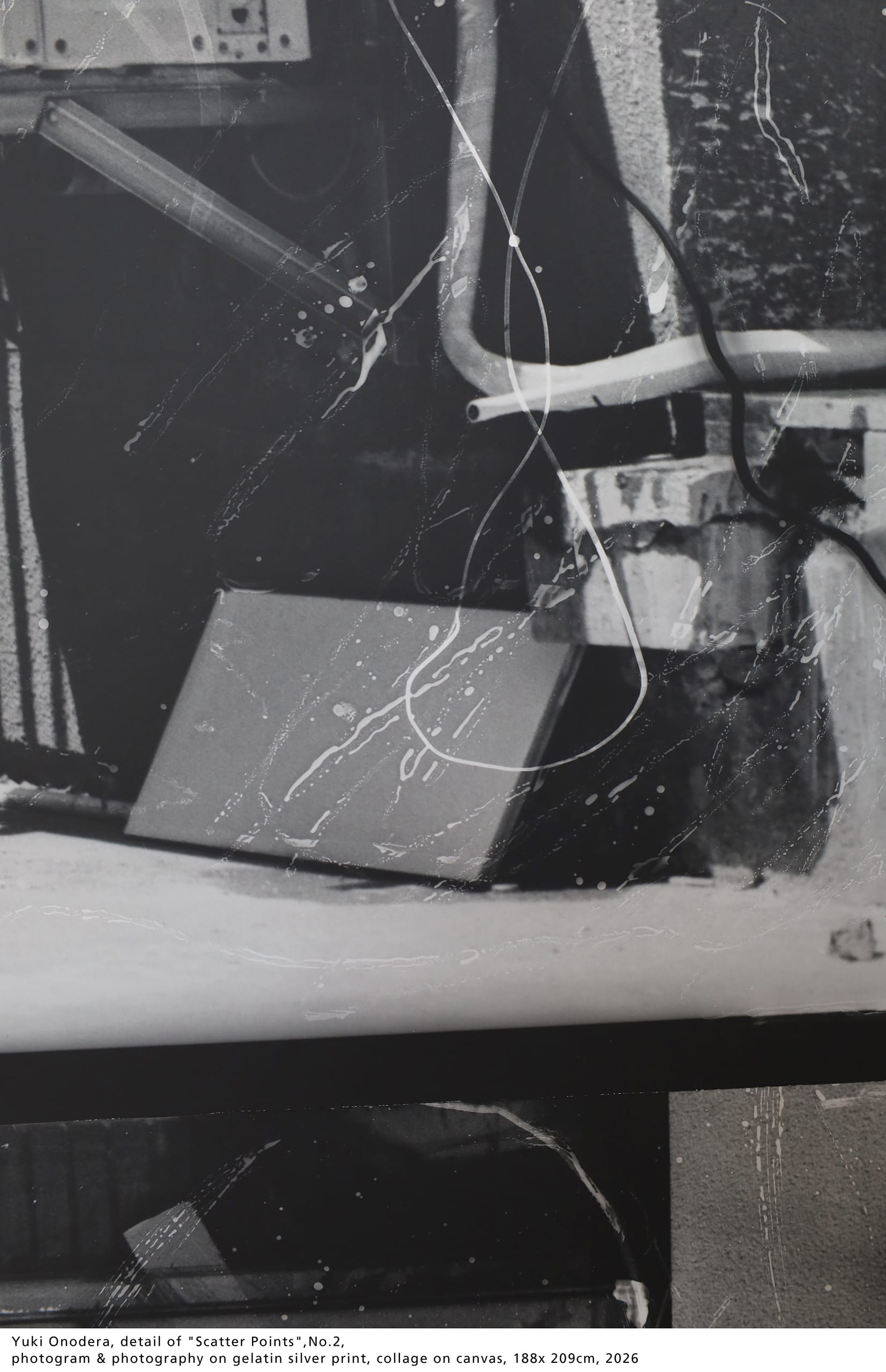
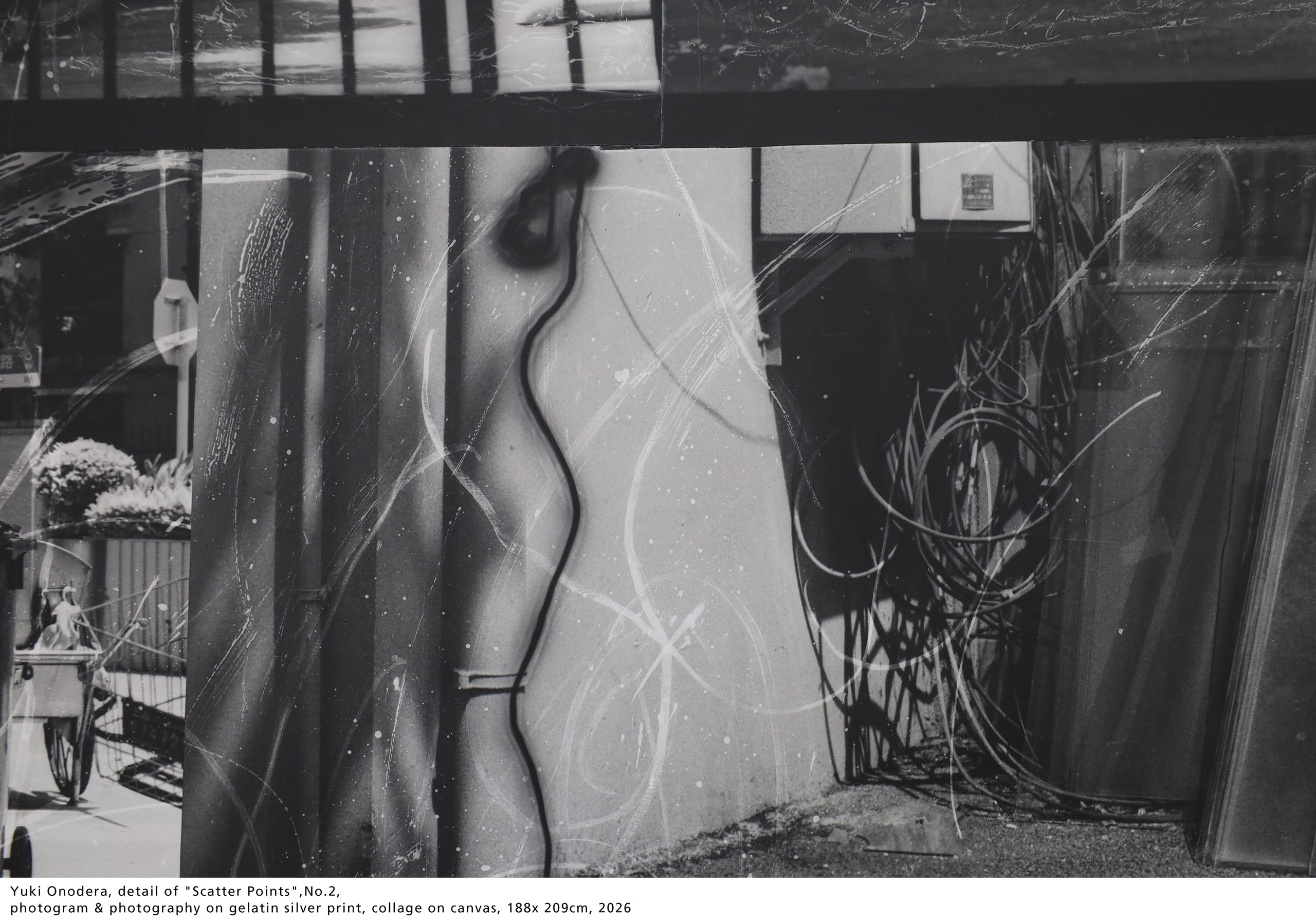
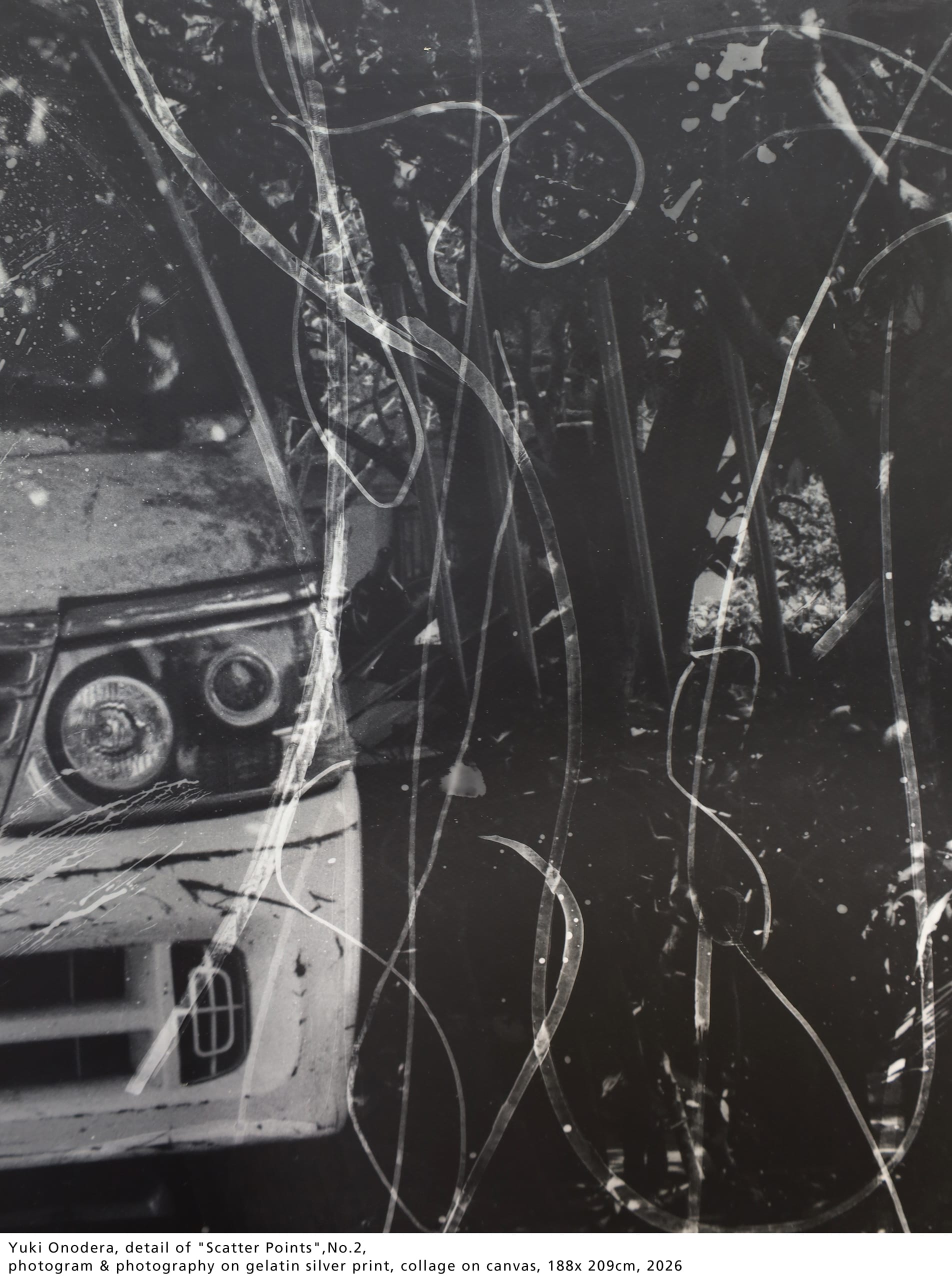
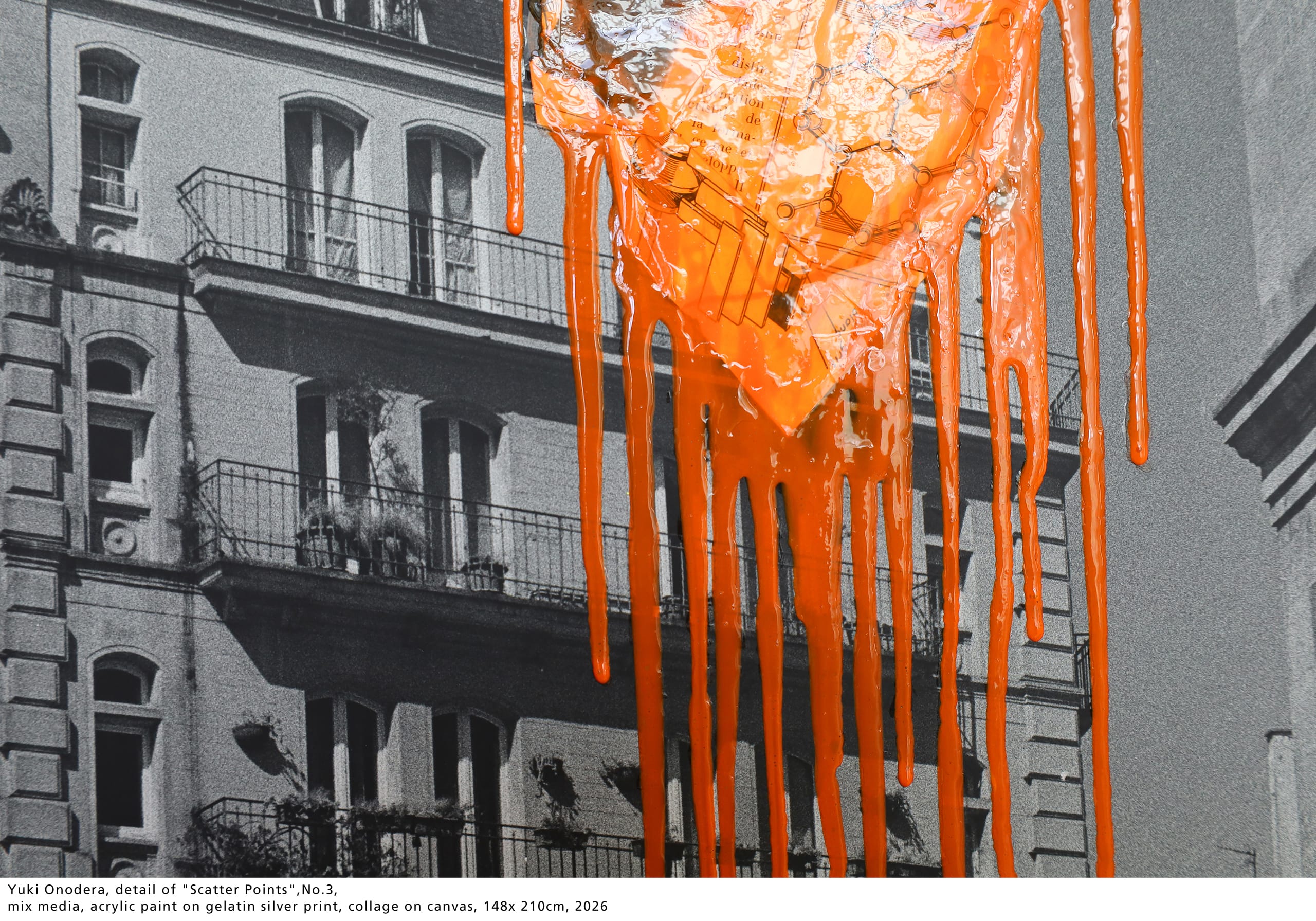
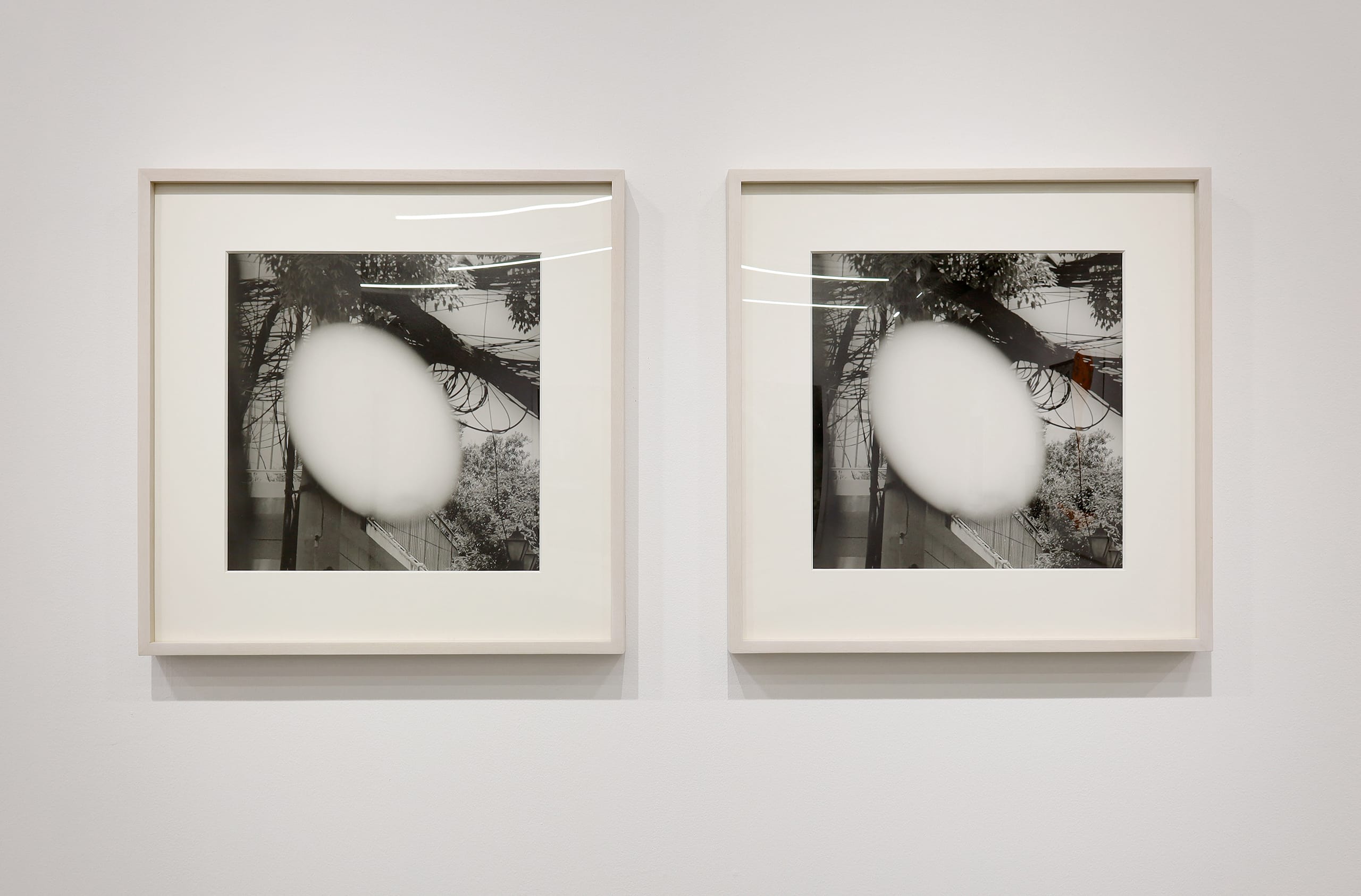
The title “Scatter Points” expresses both my photographic practice in this series and my attitude toward photography.
First, the camera is bound by perspective. And the landscape seen through the viewfinder must be cropped. I wanted to avoid this act of “cropping” as much as possible. So I would take one photograph, shift my viewpoint and standing position, take another, shift again, and take another—in this way, the position of my body and my gaze became scattered points. And while remaining in one place, I came to hold within me as many moments of time as the number of photographs I took by shifting my position. Perhaps this could be said to resonate with the scattered perspective of Chinese painting. I think you can see how the works are freed from perspectival landscape.
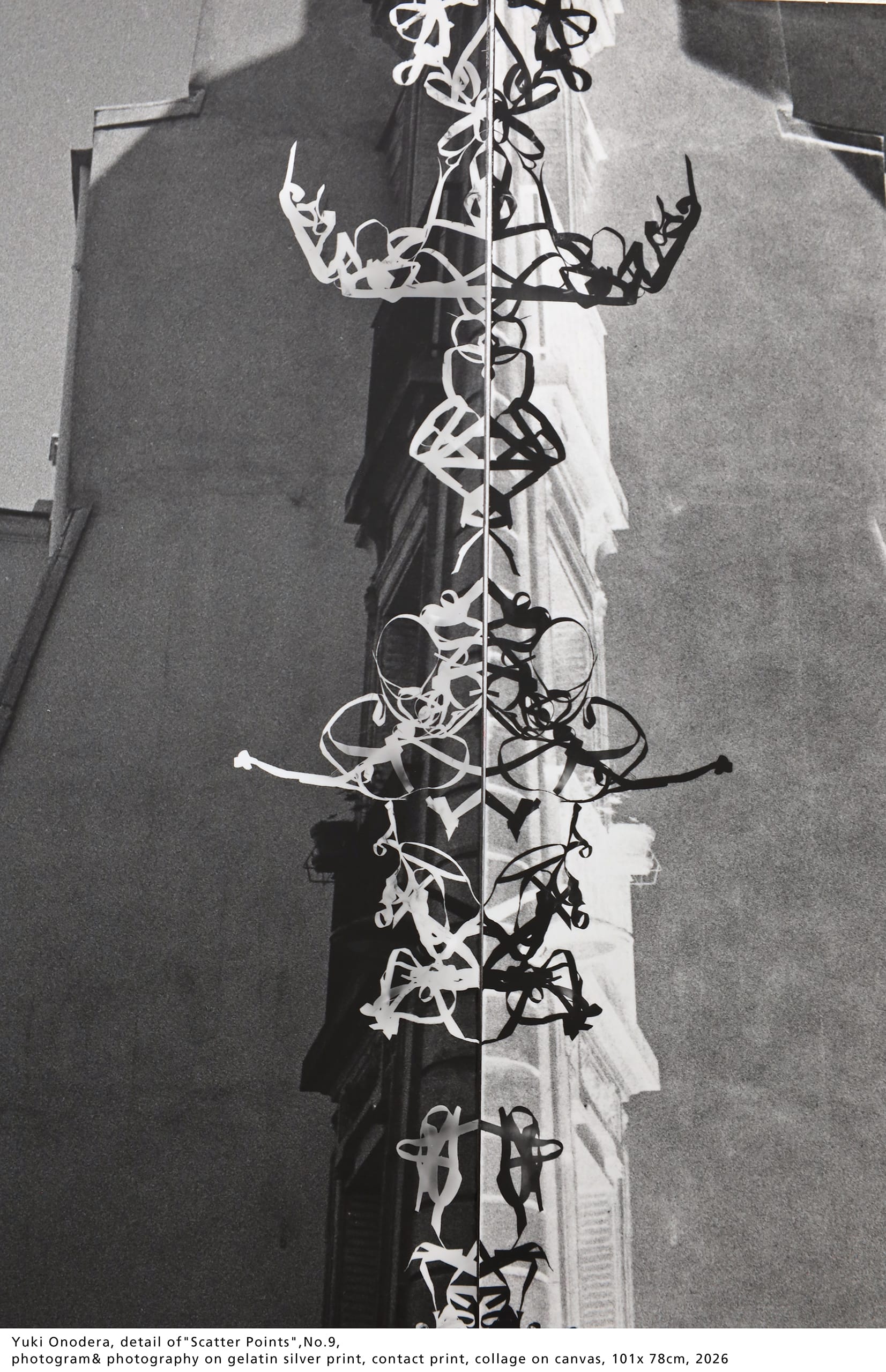
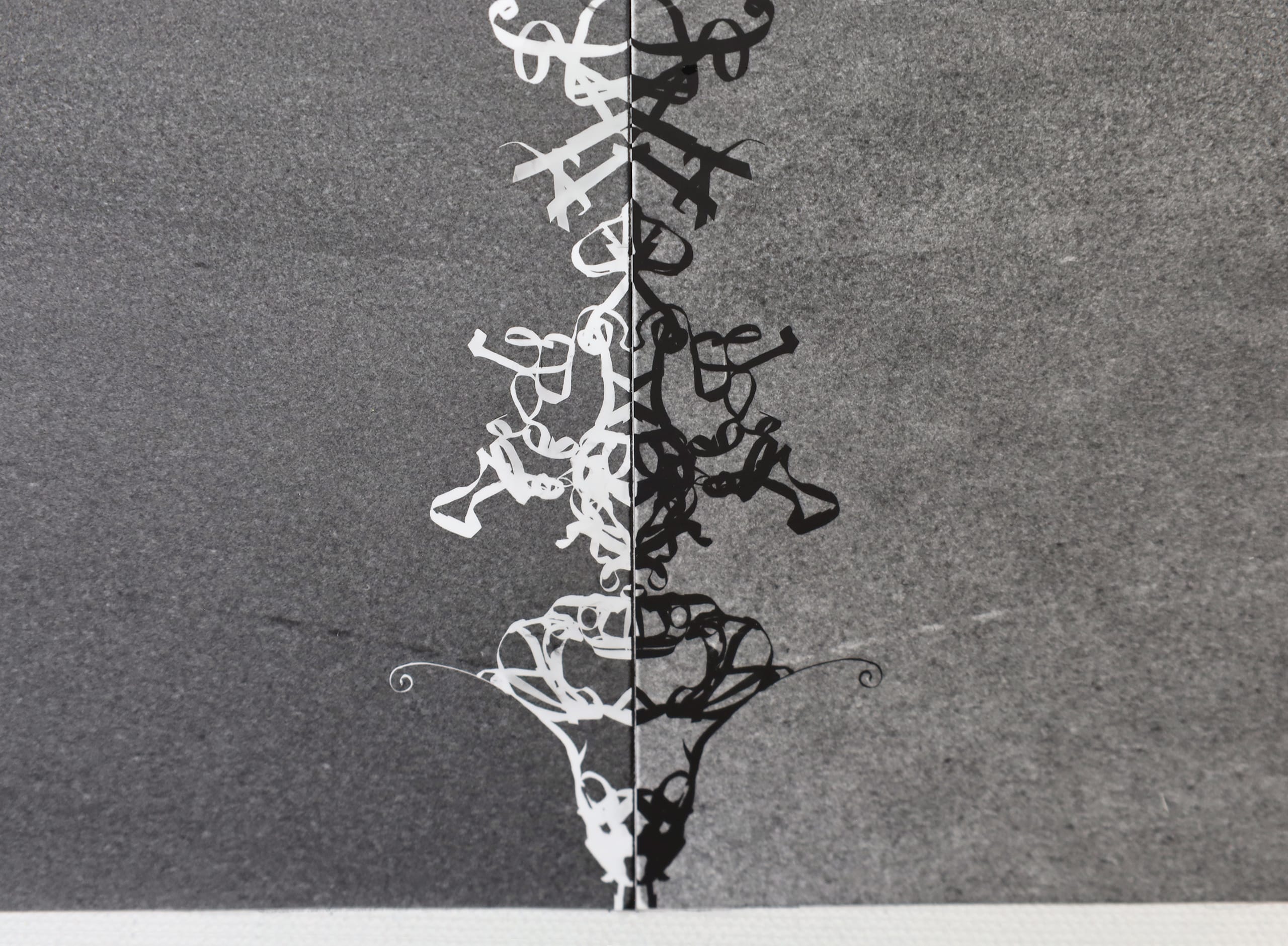
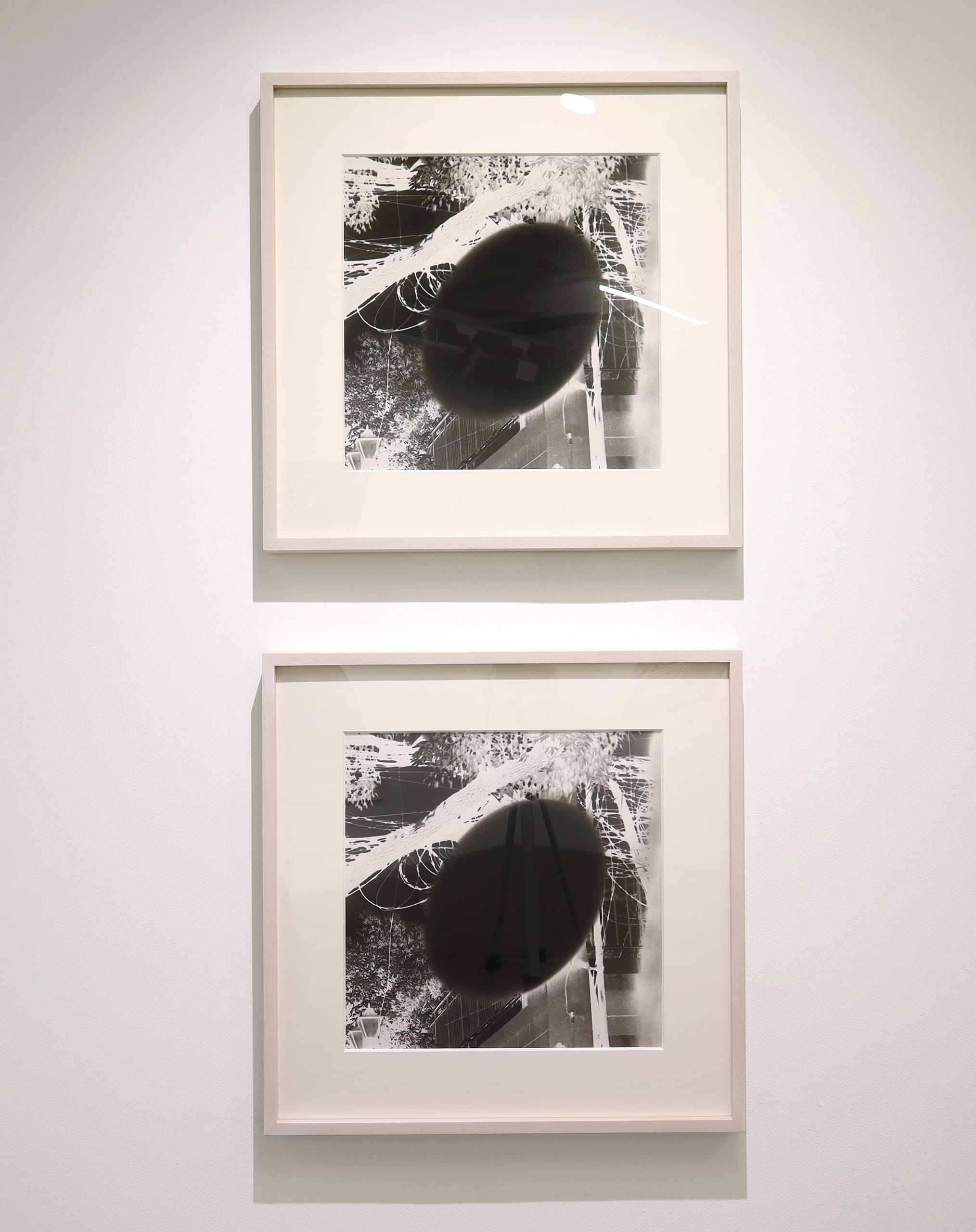
For this reason, each work in this series is composed of multiple photographs. Some works enlarge a tiny fragment of a single photograph through cropping; others transfer a photograph onto photographic paper using the silver gelatin contact printing technique, bringing positive and negative images together in a single work.
Although this series consists of silver gelatin photographs, the prints differ from ordinary ones: I incorporate various darkroom techniques and make the prints myself. These include light and shadow deliberately created in the darkroom, photograms, and exposing photographic paper directly to the light of a flashlight. I actively incorporate and turn into works even things one would not ordinarily do—things almost considered taboo. These darkroom acts are like a further overwriting of the scenes captured as scattered points. As a result, they create an effect like adding noise to fragments of actual reality.
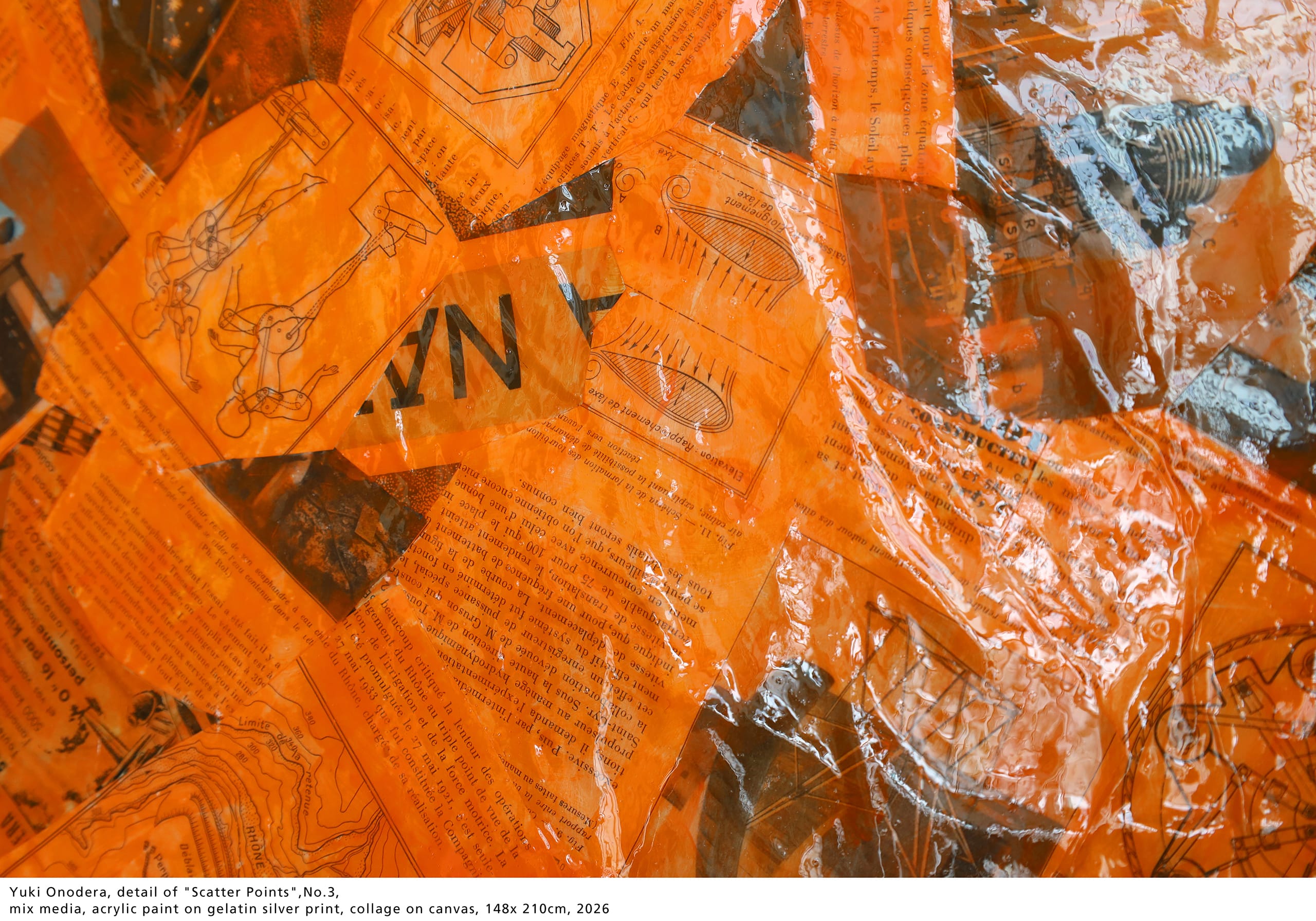
Alongside these experimental darkroom approaches, I add a further material dimension by collaging the finished prints onto canvas. By reconstituting on the canvas multiple photographs captured as scattered points, several different times are held within the work, and a visually stirred space begins to emerge.
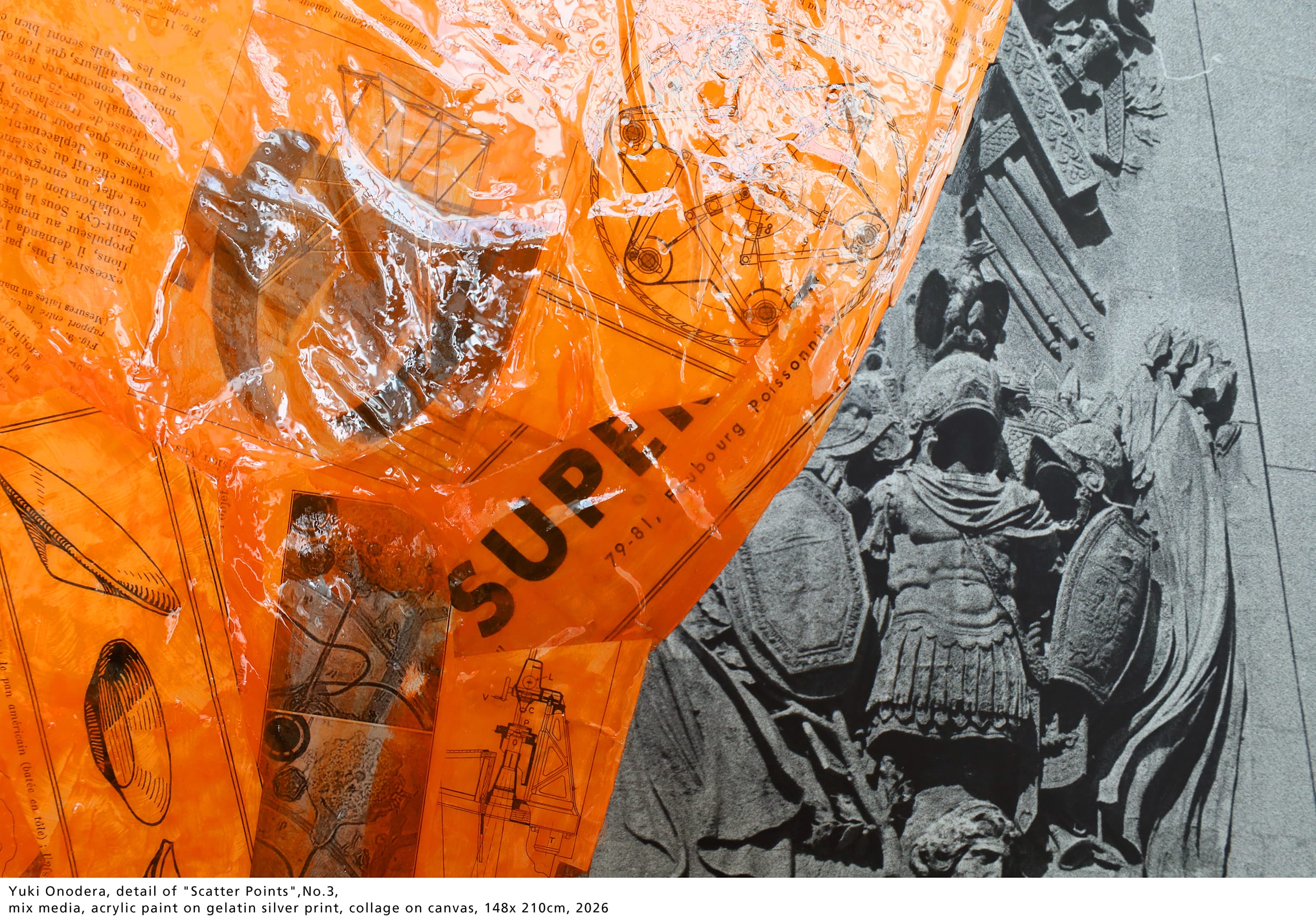
Furthermore, in some works, the collage process involves placing not only photographic prints but also old clothes and pages from old magazines onto the surface of the prints. At that point, the photograph no longer remains merely an image or picture; it merges with the actual object that exists there. Old clothes are garments once worn by someone, bearing traces of some past. On the pages of old magazines published a hundred years ago, the worldview of that time is printed as information. Yellowed by the passage of time, the paper asserts its materiality.
By applying silver gelatin techniques and collage to the photograph as image, and showing it as a material presence, I believe I can become free from photography’s original function—that is, from the act of reading what is depicted in a photograph.
Now, in this series, during the collage process I sometimes paint acrylic on the canvas or splash paint onto the old clothes to be attached to the photograph. But I have absolutely no intention of freely painting on the photograph itself. I simply take silver gelatin technique as my basis, creating some kind of absence on the photographic surface, or adding something to it.
I think photography is a very restrictive medium. From the moment of taking a photograph, there are the limitations of the camera, the development of the film, and the printing process—there is always a condition in which one cannot create freely. But for me, the existence of these limits and rules is interesting in itself. Precisely because such constraints exist, perhaps breaking through their limits allows photography’s essential nature to come into view.
And then there is contingency. This contingency is important. It is impossible to create or control chance, but by creating a situation in which fluctuations arise as one’s intentions take shape, chance and accidents become more likely to occur. How much of what emerges within those fluctuations one takes in as one’s own begins with intuition, and gradually takes shape.
A painter faces a white sheet of paper or a canvas, transferring onto the blank surface what is in the mind, inner images, and their own physicality. In photography, one captures a scene that actually took place at a particular time and place. Conversely, we cannot escape what the camera has happened to take in. In any case, it is a fragment cut from reality, something like a thin membrane. And that scene is the result of chance, never to be repeated. I believe this is precisely what makes photography such a fascinating medium.
In this series, in that sense, I want to leap far beyond the existing framework of photography and freely pursue photographicality, including through strange methods.
Yuki Onodera Sep. 29 2026